THROUGH WORDS
WORKCONTACTFIRST OF ALL, PLEASE TELL US ABOUT YOURSELF WHAT YOU DO, WHAT YOUR PROFESSION IS, PROVIDE YOUR FULL PROFESSIONAL BIOGRAPHY
AND HOW YOUR JOURNEY
IN THIS FIELD BEGAN?
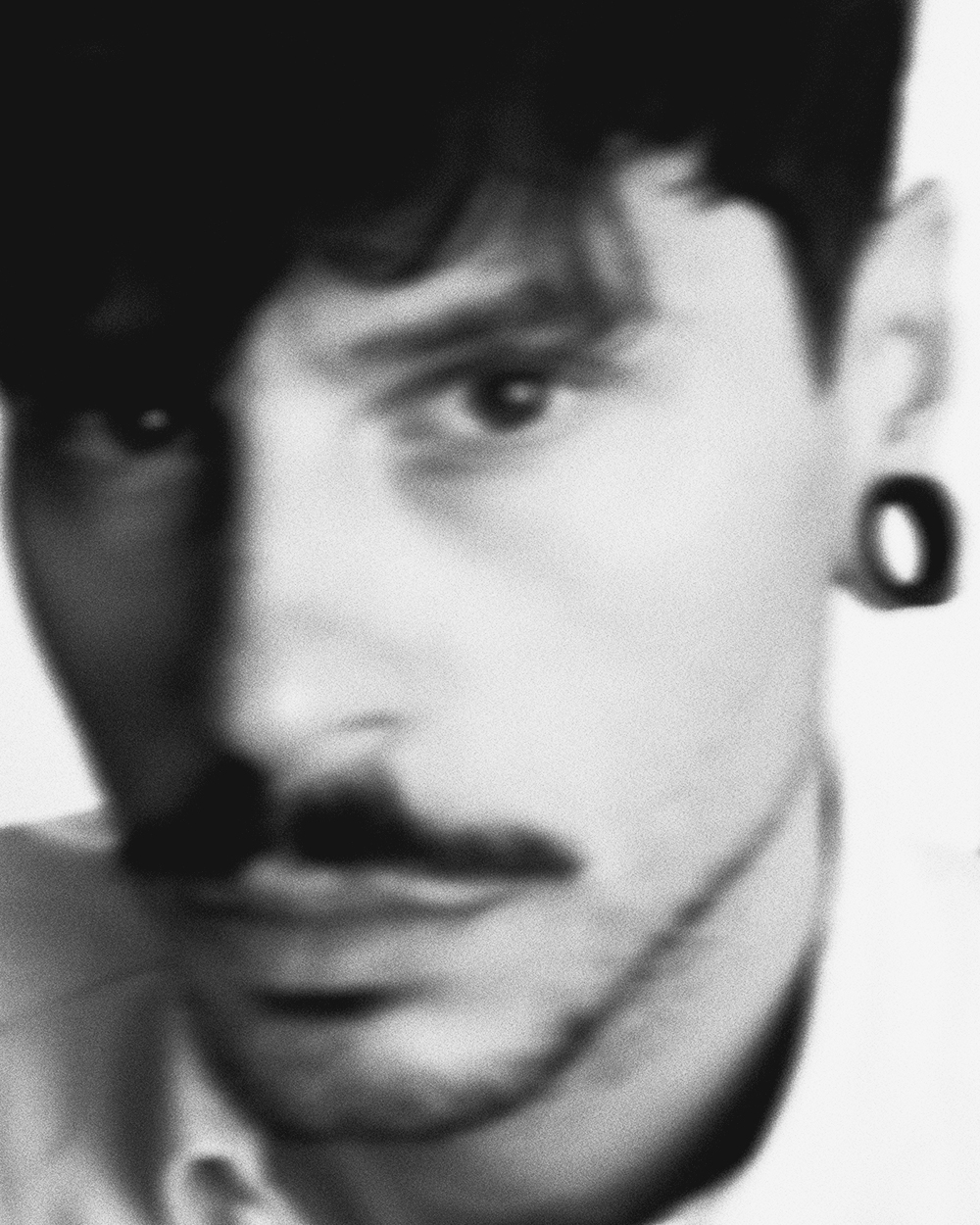
I’m Angelo, and I’m a creative. Over the last few years, I’ve mainly been working in filmmaking, driven by my love for moving images.
But, in a way, I still see everything through the eyes of a photographer. I often think of video as a photograph that, almost without you noticing, suddenly comes to life and starts moving.
Actually, my relationship with photography started long before video. Ever since I was a kid, I’ve always had a camera in my hands.
I remember taking pictures with my friends, grabbing my little camera and creating these small, improvised shoots around my hometown in Sicily,where I was born and grew up.
I didn’t really know what I was doing back then.
It was just something that came naturally to me. But looking back, I think I already had this need to tell something through images.
After high school, I decided to move to Naples and study New Technologies of Art at the Academy of Fine Arts.
I was curious about all the different ways art could exist and communicate today: photography, video, sound, installations, three-dimensional work, and everything connected to creating and producing
artistic projects and events.
During those years, I became more and more interested in contemporary art and the world of museums. But at the same time, I felt that I still needed to find my own language.
Something that felt truly mine.
Photography became the way I could express myself the most. I never really saw it as just a way of documenting reality. For me, photography has always been more about transforming reality,
about giving a shape to something that exists in my mind but maybe doesn’t have a shape yet.
It was through studying, reading books, and especially watching films that I started to understand that I wanted to go beyond the still image. Video had actually been there from the very beginning,
even in my first experiments with a camera.
But back then, it was completely instinctive. I wasn’t thinking about filmmaking as a profession.
Slowly, though, I started to see movement as another way of expressing what I couldn’t say with a photograph.
In a way, the photograph stopped being still. It started breathing.
During the first part of my professional journey, I moved more seriously into filmmaking and created a short film called The Synopsis, which is available on the WeShort platform. The film is about a love without gender, without a specific place, and without a specific time. It exists almost outside of reality, in a sort of black-and-white heterotopia, where the characters never speak but somehow understand each other.
The whole project came from a very cinematic imagination, with clear references to the cinema of the 1960s and the Nouvelle Vague, especially filmmakers like Jean-Luc Godard, François Truffaut, and Ingmar Bergman.
At the same time, I started creating my first editorial shoots. And I think that was really important for me, because editorial work gave me the freedom to experiment and slowly understand what my own visual language could be.
Through editorials, I learned how to turn the things I had in my head into something visible. And then, little by little, I started working more with the commercial world, where creativity has to deal with another kind of need: communicating something for someone else, and ultimately, selling something.
And honestly, I find that contradiction really interesting.
I think being a creative is also about finding a balance between what you want to say and what someone else needs you to say. Working with a brief doesn’t necessarily mean losing your identity. For me, it’s more about finding a way to bring your own identity into someone else’s vision.
Today, I still feel much closer to the editorial world, because it gives me more freedom to express myself and to bring something personal into the images.
At the moment, I collaborate with different photographers on both editorial and commercial projects, moving constantly between photography and video. And the more I work with both, the more I feel that the distance between them becomes very small.
I don’t really see them as two completely different languages anymore.
What I’m interested in is not simply creating something beautiful. Beauty, on its own, is not enough for me. I want to create images that have an atmosphere, something you can feel, something that stays with you. Images that have an identity.
Maybe that’s the common thread throughout my whole journey: starting from a photograph and then trying to find, through movement, everything that the photograph couldn’t say.
What was the main idea,
the first push,
or the problem you wanted to solve?
What still drives me to create today, and what has actually been with me for as long as I can remember, is something very simple but very deep: the need to be here. To feel present in the world, and to experience life in an authentic way.
For me, creating is a way of being present. The moment I stopped creating, through photography, video, events, or whatever form my creativity might take, I think I would feel like I was losing a part of myself. It’s something that has always come from within, ever since I was a child. Over the years, it has simply changed shape, but it has never really gone away.I don’t think art necessarily has to solve problems. I think it has the power to change the way we look at things. To shift our perspective, to open up new possibilities, and maybe even help us make sense of the difficulties we inevitably encounter throughout life.
For me, that’s what creating really means: observing reality, going through it, and then giving it back through my own eyes.I want to be here. I want to experience whatever happens to me and turn it into something that can reach other people. And maybe the most beautiful part is that I don’t necessarily need them to see what I see. I like to think that, through my images, everyone can find something of their own, something that allows them, even just for a moment, to experience something they long for.
In the end, creating is my way of saying, “I am here.” But it’s also a way of leaving space for other people to be here too.
What keeps you motivated even
when results are not visible?
I think that, beyond the simple need to create, there is also something in me that needs to leave something behind for other people. In that sense, I consider myself quite an altruistic person. I don’t create art just to satisfy a personal need, but more because of what it might create in someone else.
I like to think of what I create as a kind of gift. Not necessarily something that has to please someone or make them happy, but something that can stay. An image, a story, an experience, an emotion. Something that, even after it has been seen, can continue to live inside the person who experienced it, who came across it.Of course, there are moments when being creative feels heavy. There are days when you just want to stop, especially when you don’t see any concrete results, or when your work seems to give nothing back to you. And yet, even in those moments, I feel a sort of moral responsibility towards this possibility I have, this almost superpower of being able to create something and share it with other people.That awareness is what gives me the strength to keep going. I don’t always create because I’m feeling good, because I’m inspired, or because I already know what the outcome is going to be. Sometimes I simply create because I feel like I have to. And I know that, afterwards, I will feel better, regardless of whether the result is something concrete or measurable.And maybe that’s where the deepest motivation comes from: from the possibility that something I create might remain, even just for a moment, inside someone else. Even in the smallest way. Maybe through someone who looked at one of my images and felt something.
In that moment, regardless of any concrete or measurable result, I feel that what I do has meaning.
Which challenges stand out most vividly in your memory, and what did you learn from them?
One of the things I’ve learned over time is that we don’t always have the strength to create. Even when creativity feels like it’s part of who you are, almost like a calling, there are moments when everything becomes difficult and it feels impossible to find any kind of inspiration.
It helps me to remember that everything passes. Even those moments when you don’t feel like doing anything eventually come to an end. And when creativity comes back, you don’t have to invent everything from scratch. You just have to find that lost spark again, the little flame that had gone out.I also think creativity needs pauses. Sometimes you have to stop, take in what’s in front of you, and let it settle inside you. It’s a bit like taking a breath of air. When you feel like you’re running out of it, you need it almost physically. But even when there’s plenty of air, when you’re going through a fulfilling period and feel completely immersed in what you’re doing, you shouldn’t forget what truly makes you happy. For me, that’s this need to create and leave something behind.
I remember, for example, the period after I made The Synopsis. At that point in my life, I was very ambitious. I wanted to make a film as a director, and I really believed in it. I had so many ideas, probably still a little rough and immature compared to what I understood later about what it actually means to produce a film, but at the time, my creativity felt endless.So I started writing different treatments and screenplays to pitch to film production companies. They weren’t fully developed scripts with all the dialogue worked out. They were ideas, worlds, characters and stories that I wanted to turn into something real. But for several months, I received nothing but rejection after rejection. And that was difficult for me, especially because I felt like I wasn’t being understood.At the same time, those rejections taught me something important: you don’t always have to change what you love. Sometimes you just have to find another way to get there.I never stopped telling stories through images. I kept making videos, which is still what I love today. I simply started looking for a balance between what I imagine and what can actually become something tangible.
And maybe that’s one of the things I recognize most in myself: the ability to live somewhere between imagination and pragmatism. My brother once told me that I was almost the perfect balance between someone who is very imaginative and someone who is very grounded. I think it’s one of the nicest compliments I’ve ever received, because I completely see myself in that.I like having my head full of ideas, even the ones that seem impossible, while at the same time trying to find a way to turn at least some of them into something real.
Maybe, in the end, being creative also means this: never stop imagining, but learn to understand the difference between a dream and reality.
How do you balance work and personal life?
hobbies, interests, or facts about you
that the public may not know.
My biggest hobby, if I really think about it, has always been creating. As far back as I can remember, I’ve always had this need to make something. My mother remembers that when I was little, almost every day I would ask her for a pair of scissors so I could cut, put together, and build things with paper. It was such a simple gesture, but maybe it already said a lot about the person I would eventually become.
Over time, I simply directed that need towards my profession, especially through filmmaking. That’s why many of my personal interests inevitably become intertwined with my work. I don’t really know how to completely separate what I do professionally from the things I’m passionate about in life.
One of my biggest interests is definitely fashion. I love watching runway shows, discovering new trends, seeing how aesthetic languages change, and then trying to bring all of that into my own work. It’s probably one of the reasons why so many of my projects are connected to fashion. I’m not only interested in telling stories about it, but in understanding its imaginary, its world, and then transforming it through my own perspective.
Another thing I really love is creating events. I enjoy the organization, but what really interests me is being able to bring creativity into even the most practical aspects: the set design, the spaces, the objects, the atmosphere you’re trying to create. I like the idea that an experience can be designed not only to be seen, but to be lived.
And then there are people, which for me are incredibly important. I’m someone who goes out a lot, talks a lot, loves being around people and creating connections. That’s also why, whenever I can, I try to find some balance through things like yoga and working out, even though I definitely wouldn’t call myself a sporty person. I also really enjoy cooking. In the end, all of these things have something in common: they allow me to connect with other people. Human connection is probably one of the things that makes me happiest. I’m drawn to anything that creates a bridge between me and someone else, because I think creativity ultimately becomes meaningful when it can be shared.
That’s also why the relationship between work and private life is a little complicated for me. When I’m working on commercial projects, I can give myself a schedule. At some point, I close my computer, stop working, and my private life begins. Having that separation is important to me. I need to feel free, to switch off, and simply do whatever I feel like doing. But when it comes to editorials, personal projects, events, or even just thinking about what my next creative project might be, that separation almost completely disappears.
In that sense, I never really stop working, because I never really stop thinking. And maybe that’s actually the most beautiful part of it: my work often overlaps with the things that make me feel alive.
In the end, I don’t think my real hobby is photography, video, fashion, or events individually. My real hobby is this need to create and to connect with the world through whatever I create. Everything else is simply the different forms that this need chooses to take.
What do you do when you need inspiration or energy?
One of the things I’ve learned over time is that we don’t always have the strength to create. Even when creativity feels like it’s part of who you are, almost like a calling, there are moments when everything becomes difficult and it feels impossible to find any kind of inspiration.
It helps me to remember that everything passes. Even those moments when you don’t feel like doing anything eventually come to an end. And when creativity comes back, you don’t have to invent everything from scratch. You just have to find that lost spark again, the little flame that had gone out.I also think creativity needs pauses. Sometimes you have to stop, take in what’s in front of you, and let it settle inside you. It’s a bit like taking a breath of air. When you feel like you’re running out of it, you need it almost physically. But even when there’s plenty of air, when you’re going through a fulfilling period and feel completely immersed in what you’re doing, you shouldn’t forget what truly makes you happy. For me, that’s this need to create and leave something behind.
I remember, for example, the period after I made The Synopsis. At that point in my life, I was very ambitious. I wanted to make a film as a director, and I really believed in it. I had so many ideas, probably still a little rough and immature compared to what I understood later about what it actually means to produce a film, but at the time, my creativity felt endless.So I started writing different treatments and screenplays to pitch to film production companies. They weren’t fully developed scripts with all the dialogue worked out. They were ideas, worlds, characters and stories that I wanted to turn into something real. But for several months, I received nothing but rejection after rejection. And that was difficult for me, especially because I felt like I wasn’t being understood.At the same time, those rejections taught me something important: you don’t always have to change what you love. Sometimes you just have to find another way to get there.I never stopped telling stories through images. I kept making videos, which is still what I love today. I simply started looking for a balance between what I imagine and what can actually become something tangible.
And maybe that’s one of the things I recognize most in myself: the ability to live somewhere between imagination and pragmatism. My brother once told me that I was almost the perfect balance between someone who is very imaginative and someone who is very grounded. I think it’s one of the nicest compliments I’ve ever received, because I completely see myself in that.I like having my head full of ideas, even the ones that seem impossible, while at the same time trying to find a way to turn at least some of them into something real.
Maybe, in the end, being creative also means this: never stop imagining, but learn to understand the difference between a dream and reality.
What does success mean to you,
personally and professionally?
For me, success is an inner state, almost a kind of reconciliation with yourself. It’s that moment when you look at your life and feel a certain harmony between who you are, what you want, and the direction you’re moving in.
I don’t think success means having finally arrived somewhere, partly because I’m not even sure there is such a thing as a final destination. And, more importantly, arrived where? Life, by its very nature, is always becoming. Every achievement opens up a new possibility, and every answer creates a new question. Thinking of success as a final destination would somehow mean stopping the very process of discovery that makes us feel alive.
I think it’s more about being aware of the journey than reaching a specific goal. It’s that feeling of being, at least for a certain moment, on a path that feels like your own. It doesn’t necessarily mean having all the answers. It means being able to live with your uncertainties without seeing them as a failure.
Success isn’t necessarily something that comes from the outside. It doesn’t depend only on recognition, money, visibility, or other people’s approval. Those things can certainly be part of it, but I don’t think they are what success is really about.
I also believe you can find success in complete solitude. You can be successful sitting alone in a room, with nobody watching you, if in that moment you feel that you are exactly where you want to be, with yourself. It doesn’t mean you’ve necessarily achieved everything you once imagined. It means recognizing that, while you’re still searching for it, what you’re living right now truly belongs to you. It’s part of your journey, your growth, and your identity.
In the end, I don’t think success is about arriving somewhere. I think it’s about recognizing yourself in the journey while you’re still walking through it.
A motivational phrase you often repeat
I don’t really have a specific motivational quote that I repeat to myself all the time. I think it would almost be impossible to have one, because the words I say to myself change as I change, depending on what I’m going through and how I’m feeling.
When I talk to myself, I simply try to listen to what I need in that particular moment. Sometimes I need to encourage myself, sometimes I need to put my fears into perspective, and other times I just need to remind myself of who I am.
There is one thing, though, that I find myself repeating quite often: I don’t think I’m a bad person. I don’t mean it as a motivational phrase, but more as a way of finding my direction. For me, it’s a simple awareness, but somehow, it’s enough.
Because in the end, I don’t think being yourself means always having an answer, always being strong, or always doing the right thing. I think it’s more about trying to stay true to who you feel you are, without losing your humanity in the attempt to become someone else.
So I don’t need some big phrase to repeat every morning in front of the mirror. I just need to remind myself, especially in those moments when I start questioning who I am, not to betray the person I believe myself to be.
For me, being myself starts right there.
What are your future plans
regarding expanding your work or starting a new project?
There are moments when you get the feeling that a new chapter is beginning, and I feel the need to set myself some intentions, almost as if it were my own little personal New Year.
More than anything, I want to give myself more time and learn how to be more comfortable on my own. I want to face some situations by myself that, until now, I’ve always experienced alongside other people. Not because I don’t need others, but because I feel like I’ve reached a point where I can, and maybe even need to, learn to rely more on myself.
I want to try to find within myself some of the things I’ve spent a long time looking for in other people: security, answers, inspiration, reassurance. I’m realizing that many of these things don’t necessarily have to come from the outside. Some of them are already inside me. I just need to learn how to recognize them and take care of them.
I believe I have what it takes to face whatever is ahead of me, and more than anything, I want to give myself the chance to do it without always needing someone else’s help. If I need a hand, I’ll know how to ask for one, but I want to learn that I can always be my own first source of support.
I want to feel energized, curious, and open to everything that might come next. I still feel like I have so much to say, so much to explore, and so much to create. I want to keep growing, pushing myself, and discovering new ways of expressing what I have inside.
Maybe what comes next is less of a promise to other people and more of a promise to myself: to discover how far I can go when I stop looking outside of myself for everything I’m capable of building within.
© 2026 All rights reserved